
A roof leak should be treated as a water-control problem first and a repair problem second. The immediate goals are to protect people, limit interior damage, and document what happened before the source is investigated.
What should you do first after discovering a leak?
Move furniture, electronics, clothing, and other valuables away from the affected area. Place a bucket or container under active dripping, but do not stand on furniture or climb into an unsafe attic to catch water.
If water is near a light fixture, ceiling fan, outlet, or electrical panel, avoid touching the fixture or nearby switches. Shut off power to the affected area only if the electrical panel can be reached safely without standing in water. If there is sparking, a burning smell, smoke, or significant water around electrical equipment, leave the area and seek emergency assistance.
A ceiling that is bulging or sagging may be holding a substantial amount of water. Keep people and pets away from it. Do not puncture the ceiling unless directed by a qualified emergency or repair professional who can assess the situation safely.
How can you limit additional water damage?
Use containers, towels, plastic sheeting, or a temporary tarp on the floor to control spreading water. Empty containers before they overflow, and move wet belongings to a dry, ventilated area.
If water has reached carpeting, drywall, insulation, or wood trim, begin drying the area as soon as conditions are safe. Fans and dehumidifiers can help, but they should not be used around wet electrical components. Open doors and windows only when outdoor conditions will not add more moisture.
North Tonawanda experiences freezing temperatures, snow, wind, and rapid weather changes during the colder months. A leak discovered during or shortly after a storm may continue even after rainfall stops because melting snow or ice can feed water into a damaged area. Water may also travel along rafters, roof decking, insulation, or framing before appearing on the ceiling, so the visible drip is not always directly below the roof opening.
Should you inspect the roof during a storm?
No. A wet, icy, or snow-covered roof is dangerous, and wind can make ladders and temporary coverings unstable. Walking on shingles can also cause additional damage, especially when roofing materials are cold or brittle.
From the ground, it may be reasonable to look for obvious signs such as missing shingles, loose flashing, fallen branches, or a visibly displaced roof component. Use binoculars if needed. Do not climb onto the roof to inspect, sweep snow, remove ice, or place a tarp during unsafe conditions.
If a tree limb has fallen on the roof, stay clear of the damaged area. The structure may be unstable even if the damage appears limited.
What should you check inside the attic?
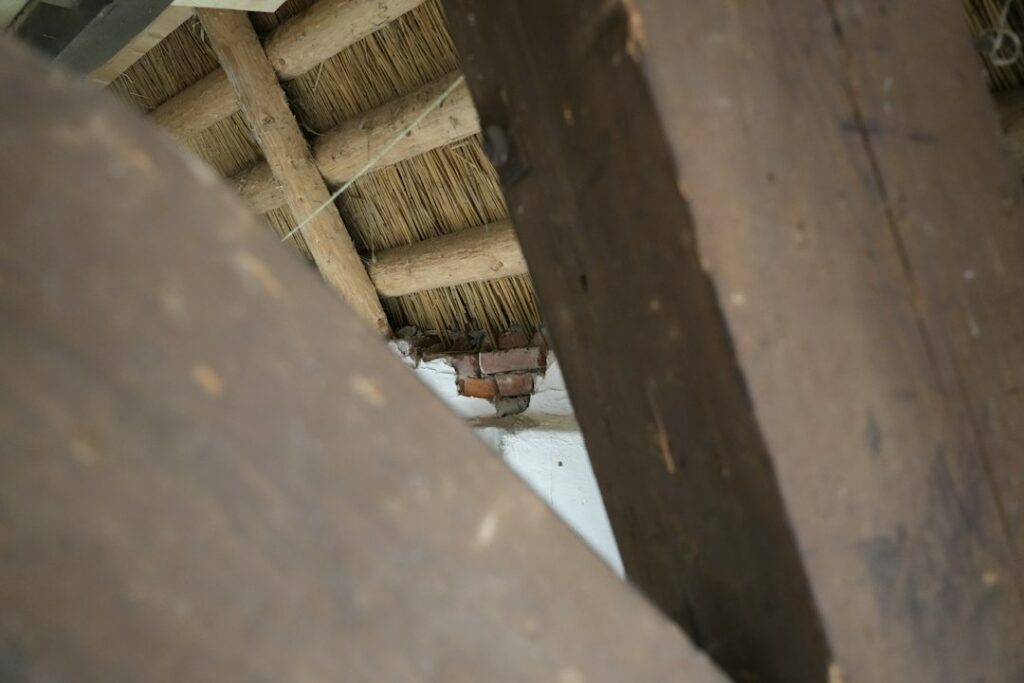
An attic inspection can help identify whether water is entering near a chimney, vent, valley, skylight, roof edge, or another roof penetration. However, only inspect if the space can be entered safely.
Wear appropriate protection and step only on structural framing or installed walkways, never on the drywall ceiling below. Watch for exposed nails, weak flooring, wet insulation, mold-like growth, and electrical wiring. A flashlight is safer than using an open flame or improvised lighting.
Look for:
- Wet or darkened roof decking
- Water stains or drip trails on rafters
- Damp insulation
- Rusted nails or metal connectors
- Daylight visible through the roof
- Moisture around vents, chimneys, or roof edges
Water marks may be old, especially if the area is dry and no fresh moisture is present. A stain shows that water was present at some point, but it does not prove the leak is active or identify its exact entry point.
What are common causes of roof leaks?
Roof leaks are often connected to a small number of vulnerable areas:
- Missing, cracked, curled, or lifted shingles
- Damaged flashing around chimneys, walls, and roof transitions
- Failed seals around plumbing vents
- Blocked or damaged gutters and downspouts
- Ice buildup along the eaves
- Storm debris or fallen branches
- Deteriorated roof valleys
- Improperly sealed skylights or other penetrations
- Condensation caused by poor attic ventilation or indoor humidity
A roof does not always leak because a shingle is missing. Wind-driven rain can enter through a small opening and travel sideways before reaching the ceiling. During winter, ice buildup near the roof edge can obstruct drainage and force meltwater beneath roofing materials. This condition is commonly called an ice dam.
Is every ceiling stain caused by a roof leak?
No. Plumbing leaks, heating and cooling equipment, bathroom condensation, and attic moisture can create stains that resemble roofing problems.

A stain below a bathroom may be related to a plumbing drain or supply line. Moisture near an attic access hatch may result from warm indoor air condensing on a cold surface. A roof-related leak is more likely when staining appears after rain, wind, melting snow, or repeated weather events, but timing alone does not confirm the source.
Photograph the stain and record when it appeared. Note whether the weather included rain, heavy snow, strong wind, or a freeze-thaw cycle. This information can help distinguish a one-time intrusion from a recurring moisture problem.
What temporary repairs are safe?
Temporary measures should be limited to actions that can be completed from the ground or from a safe interior location. A container under a drip, protective covering over belongings, and controlled drying are generally safer than climbing onto the roof.
Do not rely on caulk, roofing cement, duct tape, or expanding foam as a permanent solution. These materials may hide symptoms while water continues entering elsewhere. Do not remove shingles, scrape ice, or nail a tarp into the roof unless the work can be performed safely and correctly.
A temporary exterior covering may reduce water entry, but installing one during rain, snow, ice, darkness, or high wind creates a serious fall hazard. Roofing work also becomes more complicated when hidden decking or framing damage is present.
When does a leak require urgent attention?
Immediate attention is warranted when:
- Water is near electrical equipment
- The ceiling is sagging or collapsing
- Water is entering rapidly
- A tree or large branch has struck the roof
- The roof has a large open section
- Wind has removed extensive roofing material
- The home has significant interior flooding
- Wet materials cannot be dried promptly
Safety takes priority over saving damaged belongings. If the structure appears unstable, leave the affected area and keep others away until it can be evaluated safely.
How should you document the damage?
Take clear photographs and short videos of the ceiling, walls, flooring, attic, visible roof damage, and affected belongings. Photograph the wider room as well as close-up details. Keep a written record of when the leak was discovered, what weather occurred, and what steps were taken to limit damage.
Do not discard damaged materials or belongings before documenting them, unless they create a health or safety hazard. Keep receipts for emergency supplies and drying equipment if an insurance claim may be involved. Review the insurance policy for requirements concerning water damage, temporary protection, and reporting timelines.
The most useful record separates confirmed facts from assumptions: “water appeared below the attic access after overnight snowmelt” is more helpful than concluding immediately that a specific shingle caused the leak.
What should happen after the immediate water is controlled?
The next step is to determine both the entry point and the extent of hidden damage. The roof surface, flashing, attic, insulation, ceilings, and wall cavities may all need consideration. A repair that addresses only the visible drip may fail if water entered through a nearby penetration or damaged underlying materials.
Wet insulation, drywall, and wood should not be left enclosed for long periods. Persistent moisture can contribute to staining, odors, deterioration, and microbial growth. Drying decisions depend on the material, the amount of water, the length of exposure, and whether the source has been stopped.
For residents dealing with a leak during North Tonawanda’s winter freeze-thaw cycles, the weather may change the appearance and urgency of the problem from one day to the next. A roof that looks dry after a storm can still contain trapped moisture, and a leak that stops temporarily may return during the next thaw or heavy rain.
