
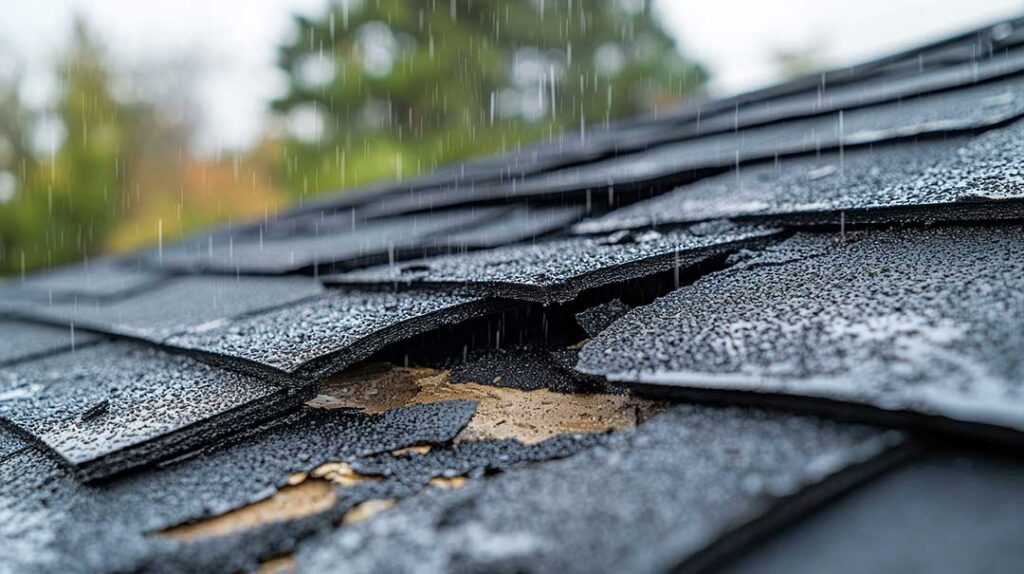
Hail can damage roofing materials even when the roof still appears intact from the ground. In North Tonawanda, NY, strong spring and summer thunderstorms can produce hail alongside heavy rain and wind, making it useful for homeowners to know what to look for after a storm.
What does hail damage usually look like?
Hail damage often appears as small, localized impact marks rather than large, obvious holes. On asphalt shingles, the most common signs are dark spots, exposed matting, missing granules, bruised surfaces, or cracked shingle edges.
A damaged area may look slightly different from the surrounding roof. Look for:
- Round or irregular depressions
- Areas where the shingle granules have been knocked away
- Black or gray marks beneath the lost granules
- Cracks running through the shingle surface
- Torn, split, or missing shingles
- Exposed fiberglass matting
- Shingles that appear soft or bruised when viewed closely
Fresh damage may be easier to identify because the surrounding roof has not yet weathered in the same way. Over time, exposed areas can become less distinct while water intrusion becomes more likely.
How can hail damage be identified from the ground?
A ground-level inspection can reveal warning signs, but it cannot confirm every type of damage. Use binoculars from a safe location to examine roof slopes, edges, vents, and other visible features.
From the ground, look for:
- Shingles that are missing, lifted, or uneven
- New dark patches or clusters of marks
- Loose granules collected near downspouts
- Damaged ridge caps along the roof peak
- Bent or dented metal flashing
- Damage to gutters, downspouts, window screens, siding, or outdoor equipment
Hail often strikes several exposed surfaces during the same storm. Damage to metal vents, flashing, or gutters can support the possibility that roof coverings were also impacted, although it does not prove that the shingles are damaged.
Do not climb onto a wet or steep roof to get a closer look. Wet shingles are slippery, and hidden damage to decking or flashing may create additional fall hazards.
Where is hail damage most likely to appear?
Hail damage is often scattered rather than evenly distributed. Roof slopes facing the direction of the storm may show more impact marks, while sheltered slopes may have little or no visible damage.
Pay particular attention to:
- Roof edges and exposed corners
- Ridge caps
- Valleys where roof sections meet
- Areas around vents, chimneys, and skylights
- Shingles beneath overhanging branches
- Older sections of a roof that may already be more brittle
The ridge cap can be especially vulnerable because it sits higher than the main roof surface. Damage there may appear as cracked or loosened pieces along the peak.
A roof does not need to have visible punctures to be affected. Hail can fracture the protective surface of a shingle without creating an immediate opening.
What does granule loss mean?
Granule loss is one of the most common signs of hail impact on asphalt shingles. Granules protect the shingle from ultraviolet light and weather exposure. When hail knocks them loose, the underlying asphalt may appear darker or smoother.
Some granule loss is normal, especially on newer roofs and near gutter outlets. A small amount of loose material after installation or routine aging does not automatically indicate hail damage.
Hail-related granule loss is more likely when:
- The bare spots are concentrated in impact-shaped areas
- The lost granules are found on multiple roof slopes
- The exposed spots are new and sharply different from nearby shingles
- Similar impact marks appear on metal components or exterior surfaces
- The roof was exposed to a recent storm capable of producing hail
Granules in gutters should be treated as a clue, not conclusive evidence. They can also result from aging, foot traffic, poor installation, or repeated weather exposure.
How is hail damage different from normal roof aging?
Normal aging usually produces gradual, widespread wear. Hail damage tends to be more sudden, localized, and irregular.
Aging may cause:
- General fading across the roof
- Uniform granule loss
- Curling or cracking along many shingle edges
- Brittle surfaces
- Worn areas around frequently exposed features
Hail damage may cause:
- Isolated impact marks
- Random clusters of missing granules
- Bruising or fractures beneath the surface
- Damage concentrated on one or two storm-facing slopes
- Similar dents on vents, gutters, or flashing
Wind damage also differs from hail damage. Wind commonly lifts, creases, or removes shingles, while hail usually creates impact marks and surface bruising. A single storm can produce both types of damage.
Can hail damage cause a roof leak immediately?
Sometimes, but not always. A roof may continue to shed water after hail has weakened the shingles. Leaks can develop later as sunlight, temperature changes, rain, and freeze-thaw cycles enlarge small fractures.
After a suspected storm, check the attic or upper interior areas for:
- Damp insulation
- Water stains on roof decking
- Darkened wood
- Dripping around vents or roof penetrations
- Musty odors
- Peeling paint or damaged ceiling materials
Interior signs do not always appear directly below the damaged area because water can travel along framing before entering the living space. If active water is entering the home, protect belongings and address the source promptly. Electrical fixtures near water require extra caution.
What should residents do after a hailstorm?
Start by recording the date of the storm and taking photographs from safe locations. Photograph the roof from the ground, along with gutters, vents, siding, screens, and other exterior surfaces.
Avoid making repairs before documenting the condition unless immediate action is needed to prevent further water entry. Temporary protection may be necessary if shingles are missing or the roof is actively leaking, but anyone accessing the roof should use appropriate fall protection and avoid unsafe conditions.
It is also useful to keep:
- Photos taken soon after the storm
- Notes about the storm’s timing and severity
- Records of interior leaks or stains
- Information about previous roof repairs
- Maintenance records, if available
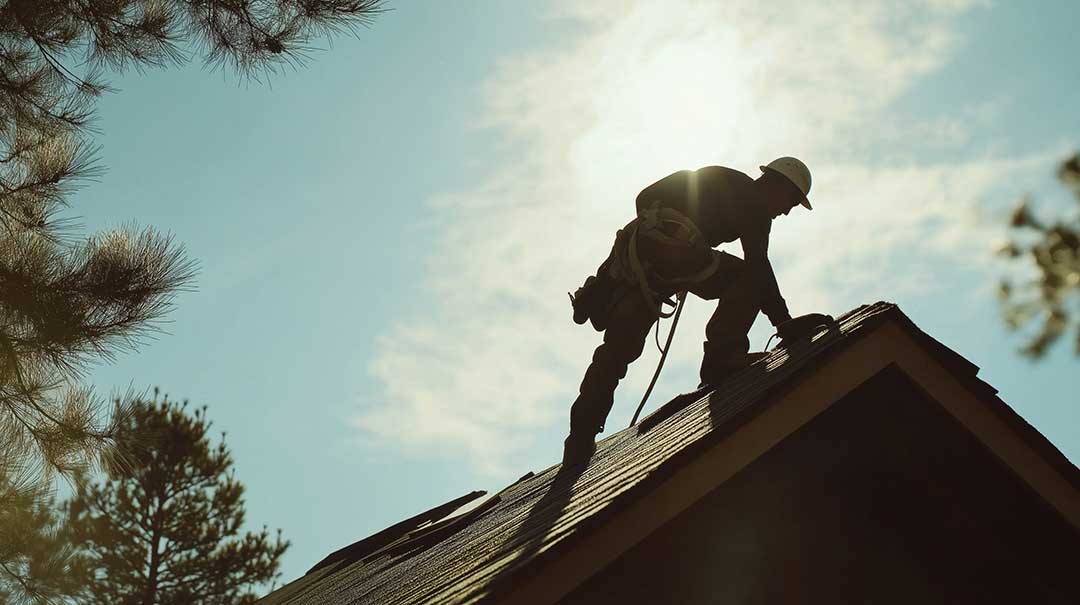
For safety and accuracy, a roof that is steep, wet, damaged, or difficult to access should be evaluated by a qualified roofing inspector. A proper inspection may include close examination of shingles, flashing, penetrations, attic spaces, and areas that cannot be seen from the ground.
Does every hail mark mean the roof needs replacement?
No. A few superficial marks do not automatically mean the entire roof needs replacement. The significance depends on whether the shingles have lost protective granules, developed fractures, or been weakened enough to reduce their service life.
The age and condition of the roof also matter. An older roof may already have widespread wear, while a newer roof may have isolated storm damage. Repairs may be suitable in some situations, but widespread or repeated damage can raise different concerns.
The most reliable determination comes from documenting the pattern and severity of the damage rather than judging the roof by one mark or one area. Hail damage should be evaluated in the context of the roof’s materials, installation, age, drainage, and exposure to weather.
In North Tonawanda, seasonal temperature swings and winter freeze-thaw cycles can make previously weakened shingles more vulnerable over time. Prompt documentation helps distinguish storm-related damage from changes that develop gradually after the event.
