
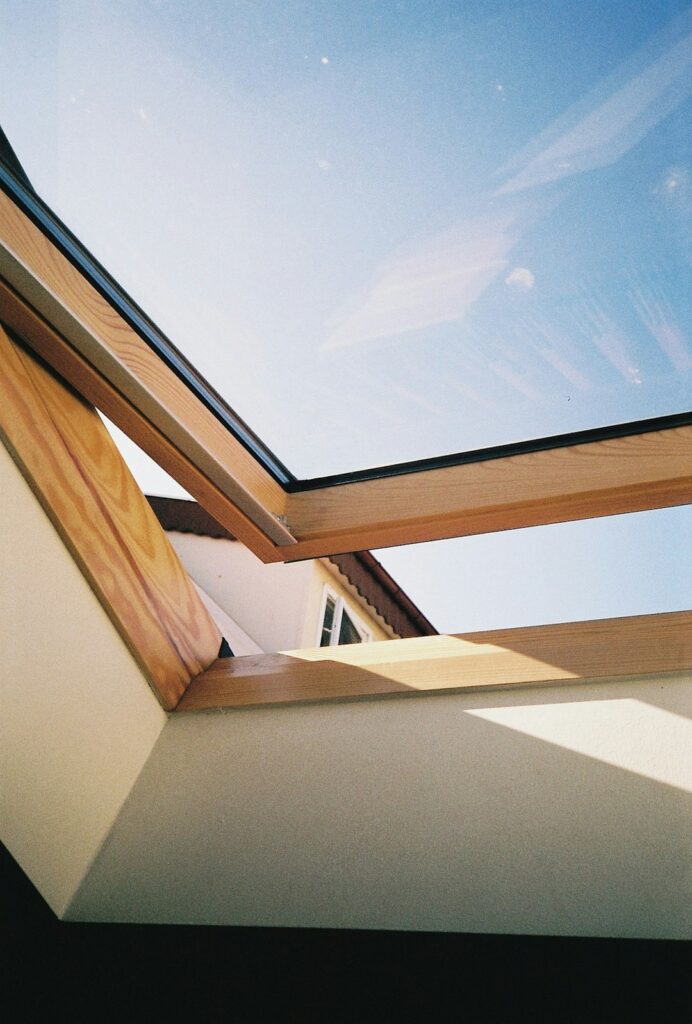
Skylights bring daylight and ventilation into rooms that might otherwise feel dark, but they also create an opening in one of the most weather-exposed parts of a house. Their effect on a roof depends less on the glass itself than on the design, flashing, roof slope, drainage, and long-term maintenance around the opening.
Do skylights weaken a roof?
A properly installed skylight does not automatically weaken a roof, but cutting an opening changes how roof loads are carried. Rafters or trusses may need to be reframed around the skylight so weight from snow, roofing materials, and the roof structure transfers safely to surrounding members.
This matters in North Tonawanda, NY, where roofs must handle cold weather, wet snow, wind, freeze-thaw cycles, and occasional heavy lake-effect snowfall. A skylight placed without proper structural framing can contribute to sagging, cracked interior finishes, or movement around the frame.
The skylight opening should be planned around the existing roof structure rather than simply cut wherever sunlight is desired. Trussed roofs require particular care because individual truss members are engineered as a system and should not be cut without an approved structural solution.
How can a skylight cause a roof leak?
Most skylight leaks develop at the connection between the skylight and the roof, not through the glass. Water can enter when flashing is incomplete, incorrectly layered, damaged, or overwhelmed by runoff from the roof above.
A skylight interrupts the normal downward flow of water. That interruption makes details such as head flashing, side flashing, underlayment, and the lower sill especially important. On a roof with shingles, the flashing must work with the shingle courses so water continues moving over, rather than behind, the roofing materials.
Common causes of leakage include:
- Deteriorated or corroded flashing
- Cracked seals or aged glazing
- Roofing materials installed too tightly against the skylight
- Missing or damaged underlayment
- A skylight installed on a roof slope outside its intended range
- Debris or snow collecting on the uphill side
- Condensation mistaken for a roof leak
A small ceiling stain may appear far from the actual entry point because water can travel along roof sheathing, rafters, insulation, or drywall before becoming visible.
Does roof pitch affect skylight performance?
Yes. Roof pitch affects drainage, snow accumulation, flashing design, and the type of skylight installation required. A skylight installed on a low-slope roof generally needs different detailing from one installed on a steeper roof.
Flatter installations can hold water, leaves, and snow for longer periods. They may also require a raised curb or other approved design rather than being installed nearly flush with the roof surface. The manufacturer’s instructions and New York State code requirements determine whether a particular skylight is suitable for the roof slope.
Roof orientation also matters. A skylight facing strong afternoon sun may provide more heat and glare during summer. A north-facing skylight often produces more even light, while a south-facing unit can contribute more solar gain during colder months and more overheating risk during warmer weather.
Can skylights contribute to ice dams?
They can. A skylight may become a warmer section of the roof, especially if the surrounding shaft is poorly insulated or air-sealed. Heat escaping from the room can melt snow near the skylight. Water may then refreeze farther down the roof where the surface is colder, contributing to an ice dam.
Ice dams are more likely when several conditions occur together:
- Snow remains on the roof during extended cold weather
- Warm air leaks from the living space into the attic or roof assembly
- Insulation is uneven around the skylight shaft
- Roof ventilation is inadequate
- The roof has complex slopes or shaded areas
- Meltwater cannot drain freely
A skylight is not necessarily the sole cause of an ice dam. It may simply reveal weaknesses in attic insulation, air sealing, or ventilation that were already present.
How do skylights affect attic insulation and ventilation?
A skylight creates a transition between the roof covering and the interior ceiling. That transition must be insulated without blocking required airflow above the insulation.
If insulation is compressed, missing, or poorly fitted around the skylight shaft, heat can escape and condensation may form. If ventilation channels are blocked, moisture can accumulate in the roof assembly and contribute to mold, wood deterioration, or premature roofing failure.

The shaft connecting the ceiling to the skylight also affects performance. A deep or poorly sealed shaft can become cold at its edges, causing condensation or cold drafts. In finished rooms, staining or peeling paint around the skylight may be an insulation or air-sealing problem rather than a flashing problem.
Do skylights shorten the life of roofing materials?
A skylight can shorten the useful life of nearby roofing materials if it leaks, traps debris, creates difficult drainage, or receives more ultraviolet exposure than expected. However, the presence of a skylight alone does not mean the surrounding roof will fail early.
The age of the skylight and the age of the roof should be considered together. Replacing a roof around an old skylight may leave an aging component in the new roof system. Replacing the skylight at the same time can reduce the need to disturb newer shingles later, but compatibility between the skylight, flashing system, underlayment, and roofing material still matters.
Roofing work around skylights also requires careful sequencing. New shingles cannot compensate for damaged frames, failed seals, or improperly installed flashing.
What maintenance should homeowners perform?
Skylights should be inspected from both the roof side and the interior side when conditions are safe. Interior checks are often useful because early problems may appear as subtle changes before active dripping begins.
Look for:
- Brown or yellow ceiling stains
- Bubbling paint or damaged drywall
- Damp wood or insulation near the shaft
- Drafts around the interior trim
- Fogging or moisture trapped between panes
- Cracked glazing or damaged frames
- Missing shingles near the skylight
- Lifted, rusted, or distorted flashing
- Leaves and other debris collecting above the unit
Snow should not be shoveled from a skylight with sharp tools, since the glazing and surrounding seals can be damaged. Heavy snow loads, persistent leaking, or signs of structural movement are hazardous conditions that require prompt attention.
Are skylights worth having in a local home?
A skylight may be useful when it brings natural light to a hallway, stairwell, bathroom, attic room, or other space with limited wall windows. It can also reduce the need for electric lighting during the day.
The tradeoff is that the roof becomes more detail-sensitive. A skylight adds another penetration that must remain watertight through seasonal movement, snow, rain, wind, and temperature changes. In older homes, the decision should also account for the existing roof age, attic insulation, roof framing, and the condition of the ceiling below.
The practical question is not simply whether skylights are good or bad for a roof. It is whether the opening is structurally supported, properly flashed, suited to the roof slope, insulated and air-sealed, and maintained as part of the entire roofing system.
