
A roof problem rarely stays limited to the roof. A missing shingle, loose flashing detail, blocked drainage path, or small leak can gradually affect insulation, ceilings, wall cavities, framing, electrical components, and indoor air quality.
For households in North Tonawanda, NY, seasonal freeze-thaw cycles, wind, rain, snow, and ice can make a minor defect more active over time. The financial difference between early maintenance and delayed repair is often substantial—not because every small problem becomes severe, but because hidden damage tends to spread while the original warning sign is ignored.
What is the true cost of ignoring a roof problem?
The true cost includes more than the eventual roofing bill. It may involve interior repairs, damaged belongings, energy waste, emergency work, safety concerns, and possible complications with insurance or building-code requirements.
A small roof defect might initially require only limited attention. After repeated wetting and drying, however, the same defect can lead to:
- Wet attic insulation
- Stained or sagging ceilings
- Rotted roof decking
- Damaged rafters or wall framing
- Peeling paint and deteriorated drywall
- Mold or musty odors
- Shortened service life for the entire roof system
- Damage to flooring, furniture, or stored possessions
The longer water has access to building materials, the less likely the repair remains confined to the original entry point.
Why can a small leak become a major repair?
Water does not always travel straight down from the visible stain. It can move along roof decking, rafters, insulation, wiring, plumbing lines, and the back side of drywall before appearing inside the home.
That means a ceiling mark may not be directly below the damaged shingle or flashing. By the time a stain becomes visible, nearby materials may already have been dampened repeatedly.
Wood can swell, soften, split, or decay. Insulation can lose effectiveness when wet. Drywall may absorb water and develop an uneven surface before it begins to crumble. In some cases, the visible ceiling damage is only the first place where the water has become noticeable.
A leak that appears only during heavy rain should not automatically be considered minor. The amount of water entering the home depends on wind direction, rainfall intensity, snow melt, ice buildup, and the condition of the roof surface.
How does winter weather affect neglected roofing?
Cold weather can expose weaknesses that remain less noticeable during mild conditions. Ice, snow, wind, and repeated freezing and thawing can enlarge cracks, loosen materials, and force water into vulnerable seams.
Ice dams are one example. When melting snow refreezes near a roof edge, ice can obstruct normal drainage. Water may then back up beneath roofing materials and enter areas that would normally remain dry.
Snow and ice can also add weight to the roof structure. Most roofs are designed to carry expected environmental loads, but existing damage, poor drainage, structural deterioration, or unusually heavy accumulation can increase concern.
After winter weather, warning signs may include:
- New ceiling stains
- Icicles forming repeatedly in the same area
- Damp attic insulation
- Drips around roof penetrations
- Loose or missing shingles
- Gutters pulling away from the fascia
- Doors or windows that become difficult to operate near an affected wall
- Sagging roof lines or interior ceilings
Climbing onto an icy or snow-covered roof creates a serious fall hazard. Suspected structural movement, active interior leaking near electrical fixtures, or large areas of roof damage require prompt attention for safety reasons.
Can ignoring roof damage increase heating and cooling costs?
Yes. A roof problem can contribute to energy waste, especially when insulation becomes wet or attic air sealing is disrupted.
Wet insulation generally performs less effectively than dry insulation. Air leaks around roof penetrations, damaged attic materials, and poorly sealed openings can also allow heated air to escape during winter and warm air to enter during summer.
The effect may not appear as a dramatic jump on one utility bill. More often, residents notice rooms that are unusually cold, uneven temperatures between floors, excessive attic moisture, or increased reliance on heating and cooling equipment.
Roof-related energy loss is not always caused by the roof covering itself. Ventilation, insulation depth, air sealing, and moisture control all interact. Repairing a leak without addressing wet insulation or damaged surrounding materials may leave part of the problem unresolved.
What hidden damage can develop in the attic?
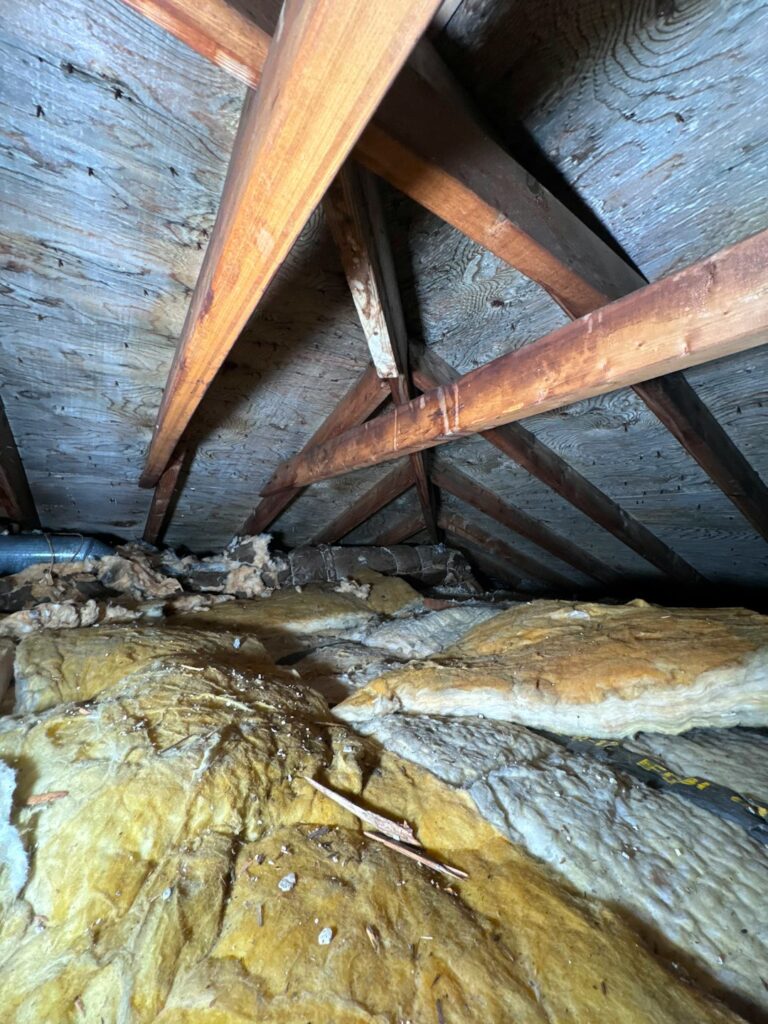
Attics often conceal roof deterioration until the damage becomes extensive. A darkened area on roof decking, rusty fasteners, damp insulation, fungal growth, or a persistent musty smell can indicate repeated moisture exposure.
Possible hidden consequences include:
- Loss of structural strength in roof decking
- Deteriorated truss or rafter connections
- Corroded metal components
- Compressed or contaminated insulation
- Damage around chimneys, vents, skylights, and roof edges
- Moisture affecting electrical wiring or fixtures
- Condensation caused by inadequate ventilation or air leakage

Not every dark mark means active leaking, and not every musty odor proves mold. Still, unexplained changes in an attic deserve investigation, particularly after storms or periods of snow and ice.
Does insurance always pay for neglected roof damage?
Insurance coverage depends on the policy, the cause of the damage, maintenance history, exclusions, and the specific circumstances of the loss. Sudden damage from a covered event may be treated differently from deterioration that developed gradually.
A long-standing leak, deferred maintenance, or worn-out roofing material may create coverage questions. Interior damage may also be evaluated separately from the roof itself.
Keeping dated photographs, repair records, and notes about leaks can help document the condition of a home. It is also useful to understand the difference between sudden storm damage and ordinary aging. Insurance decisions are policy-specific, so assumptions based on another household’s experience can be misleading.
When does a roof issue become a safety problem?
A roof issue becomes more urgent when it threatens occupants, the structure, or essential systems.
Immediate safety concerns include active water near electrical equipment, a visibly sagging ceiling, major structural movement, large sections of missing roofing, falling materials, and roof access conditions involving ice or unstable surfaces.
Temporary measures may reduce exposure during an emergency, but they do not replace a lasting repair. Containers placed under a leak can protect flooring while water is entering, yet they do not address saturated insulation, hidden framing damage, or the source of the leak.
Residents should avoid cutting into a bulging ceiling, walking beneath loose exterior materials, or climbing onto a damaged roof without proper safety equipment and training.
Are permits required for roofing work in North Tonawanda?
Roofing work may be subject to local permit requirements and applicable New York State building codes. The requirements can depend on the scope of work, the type of roof alteration, structural changes, and whether other building systems are affected.
Before major roofing work begins, property owners should verify current requirements with the local building inspection office. This is especially relevant when replacing roof decking, changing roof geometry, altering structural components, or combining roofing work with siding, insulation, ventilation, or other renovations.
Permit records can also matter later during property transactions, inspections, or questions about whether work was completed according to applicable codes.
What early warning signs deserve attention?
The most useful warning signs are often simple and visible:
- Shingles that are missing, cracked, curled, or lifted
- Granules collecting in gutters or downspouts
- Flashing that is loose, bent, or separated
- Water stains on ceilings or upper walls
- Damp attic insulation
- Peeling paint near roof lines
- Repeated ice buildup at eaves
- Gutters that overflow or pull away from the home
- Daylight visible through roof boards
- A musty smell after storms
Not every sign requires the same response. A single loose shingle and a sagging ceiling are not equivalent conditions. The practical goal is to identify problems while the repair can still remain limited.
The cost of ignoring roof problems is often measured in the damage that becomes necessary later: more materials removed, more rooms affected, more disruption, and fewer repair options. Regular visual checks from the ground, attention after severe weather, and prompt investigation of interior moisture can help distinguish routine maintenance from a problem that is spreading.
